
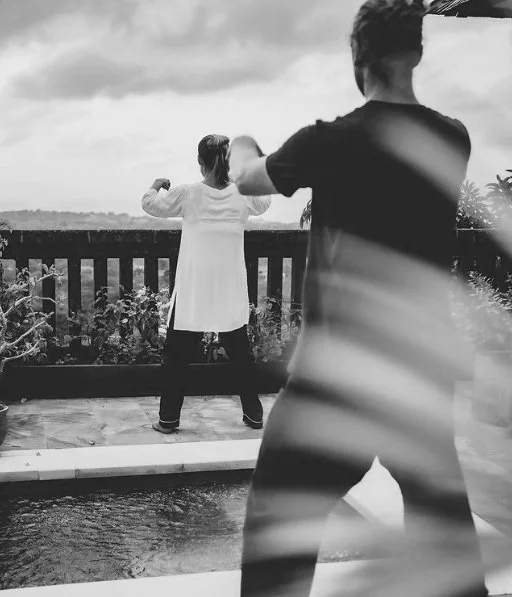
Play Your Way to Better Tai Chi: How the Chinese Verb "Wan" Unlocks the Spirit of the Martial Arts
Tai chi is often associated with strict discipline, precise angles, and serious faces. However, the deepest traditional secret to mastering this ancient art lies in a completely different attitude: playfulness. In Mandarin Chinese, advanced practitioners often do not say they "practice" tai chi. Instead, they use the word wan (玩)—which literally means "to play." Shifting your mindset from rigid work to creative play can completely transform your practice, making it both more enjoyable and far more effective.
The True Meaning of Wan
In Western culture, play is often dismissed as something trivial or reserved only for children. In the context of Chinese internal martial arts, wan carries a profound, sophisticated meaning. It describes an attitude of lighthearted exploration, deep curiosity, and curiosity without anxiety over the final result.
When you wan tai chi, you treat the movements like a fascinating puzzle or a favorite toy. You turn it over in your hands, look at it from different angles, and experiment with it just to see what happens. This perfectly captures the true energy of tai chi because the art is fundamentally based on the concept of Yin and Yang—the continuous, fluid balancing of opposites. Play requires this exact same agility, adaptability, and spontaneous joy.
Why Hard Work Blocks Soft Power
Tai chi is famous for its "soft power," or jin. This unique strength does not come from tensing your muscles; it comes from deep physical relaxation and mental presence.
When you approach tai chi with a stressful "workout" mindset, your body naturally tightens up. You worry about getting the steps wrong, your shoulders shrug upward, and your breathing becomes shallow. This tension blocks the flow of internal energy (qi) and locks your joints.
By adopting a play-based mindset, you instantly trick your nervous system into letting go of stress. Play signals safety to your brain. When you feel safe, your muscles relax, your center of gravity drops, and you can finally experience the deep, fluid connectivity that tai chi promises.
Three Ways to Bring Play into Your Practice
Transforming your daily routine into a play-based practice does not require changing your form. It requires changing your intent.
Play with Structure: Instead of stressing over a perfectly straight back, pretend your spine is like a string of pearls suspended from Heaven, gently swaying in a breeze. Experiment with being slightly too heavy, then slightly too light, until you find the perfect, joyful middle ground.
Play with Visualizations: Tai chi movements have poetic names like "White Crane Spreads Its Wings" or "Repulse Monkey." Lean heavily into these images. Do not just move your arms; actually imagine the air resistance against your feathers, or feel the heavy, fluid density of moving through water.
Play with Partner Work (Tui Shou): Push hands practice is often ruined by competitiveness. If you approach it as a game to "win," you will stiffen up and resort to brute force. If you treat it as a physical conversation—a game of tag where the goal is to listen with your skin—you will naturally absorb and redirect your partner's force with ease.
The Ultimate Reward: Sustainable Joy
The biggest benefit of a play-based practice is simple longevity. When practice feels like a chore, you will eventually find excuses to skip it. When practice becomes your designated time to play, explore, and feel vibrant in your body, you will look forward to it every day. By learning to wan tai chi, you stop fighting yourself and finally start flowing.