
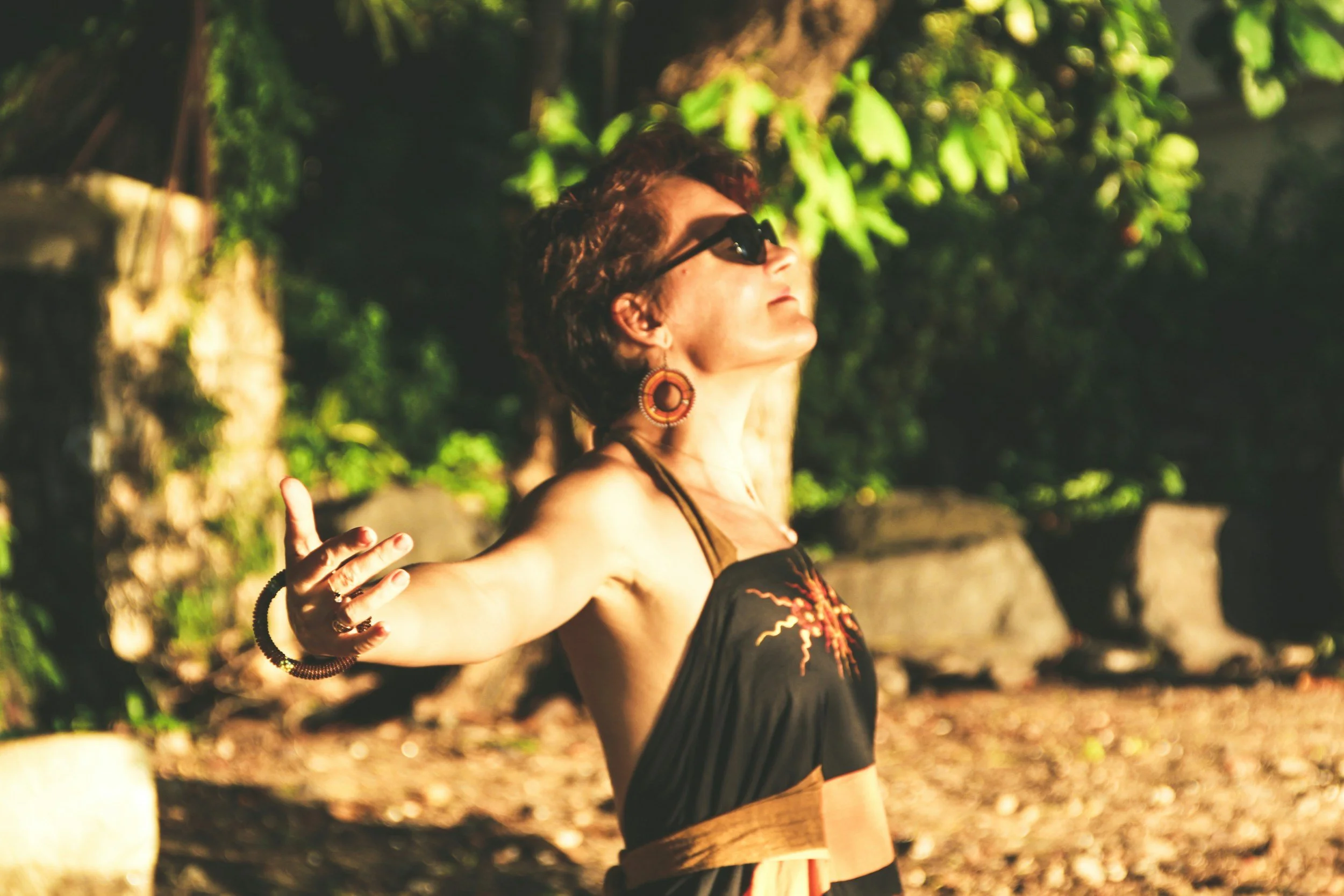
A playful Freestyle Tai Chi practice sculpts a supple, nimble body more like a contemporary dancer than a stiff, slow, muscle‑bound athlete by prioritizing fluidity, spontaneity, and internal ease over brute force and rigid form.
Instead of training isolated muscle groups to contract and hold, Freestyle Tai Chi encourages continuous, spiraling movement that lengthens fascia, improves joint articulation, and refines balance through shifting weight and micro-adjustments; this develops mobility, coordination, and resilient relaxed strength. Playful variation—improvisation, rhythmic changes, and explorations of tempo and intention—teaches the nervous system to move adaptively and efficiently, producing quick, light transitions and expressive range rather than heavy, locked patterns. The result is a body that responds with dancer‑like elasticity and poise: grounded yet free, strong yet soft, capable of effortless flow rather than brute, slow power.